Context
I joined Levy Health as Senior Product Designer while the product was already live. I tightened the experience, simplified workflows, and brought structure to an existing design system across patient and provider journeys. The work resulted in a cleaner, more reliable product, reduced friction, and steady improvement in engagement and conversion.
My role:
Senior Product Designer
Team:
Product Manager, Engineering Team, QA
Timeline:
Ongoing (active product)
Tools:
Figma, FigJam, Notion, Miro, Useberry
Business Model:
B2B2C Healthcare Platform

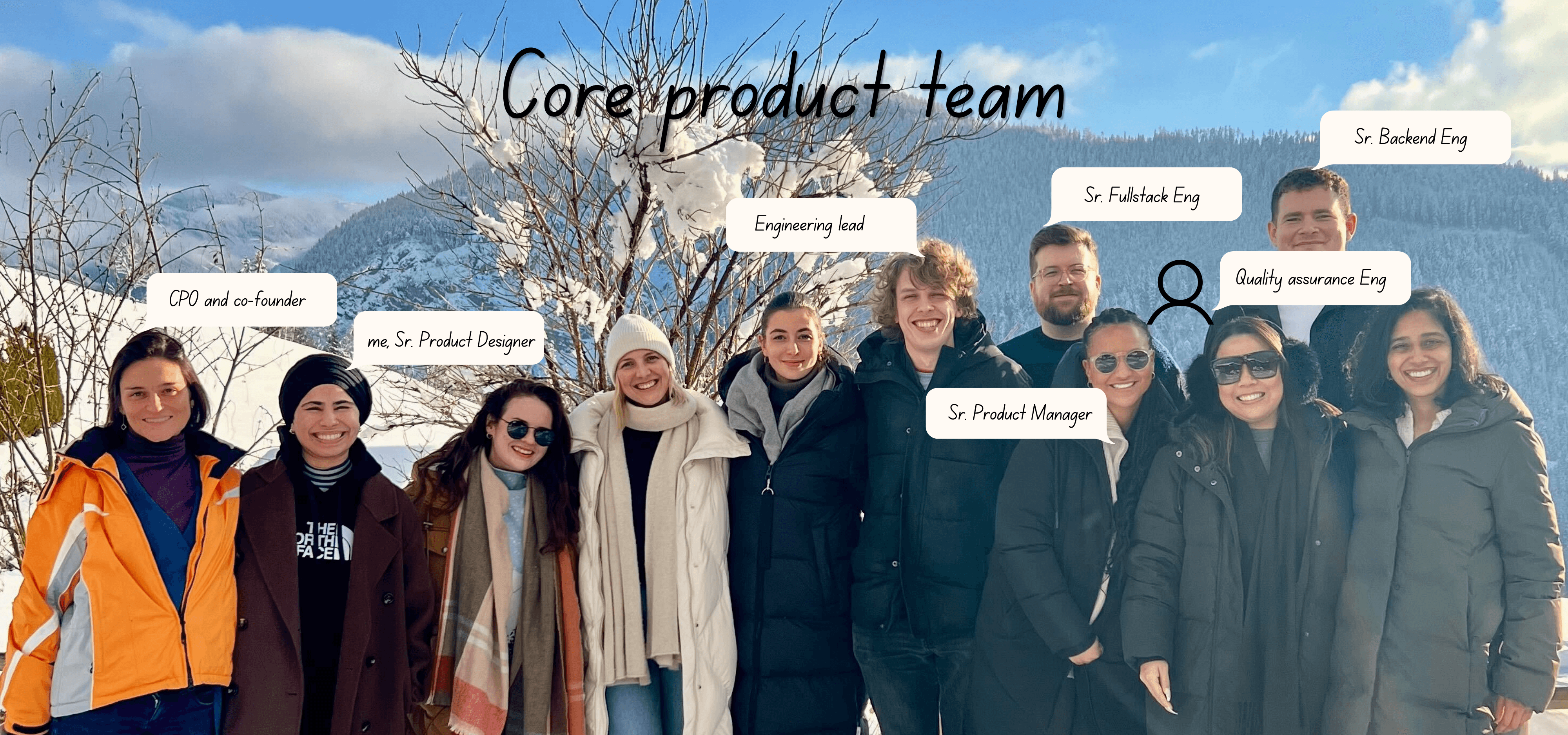
As a Product Designer, I…
• Reworked key patient and provider flows to simplify workflows and make steps clear and easy to act on
• Ran usability sessions to see where users got stuck, hear real feedback, and test improvements directly in the product
• Updated onboarding, assessments, documents, scheduling, and results so the journey felt steady, calm, and easy to finish
• Designed tools for providers to track progress, review results, and coordinate care without digging or switching screens
• Organised and rebuilt key parts of the design system to remove clutter, standardise components, and setting clearer usage rules for the team
• Worked side by side with engineering, product, and medical teams to turn clinical rules into screens and interactions that made sense
• Set up clear review points so decisions stayed aligned and the team moved with less back and forth

The problem
Complexity outpacing clarity
As more clinics joined the platform, unique requirements and logic multiplied faster than they could be standardized. Over time, the experience became fragmented, with disconnected workflows and inconsistent structures across journeys.
Patients often lost context mid-way, unsure what came next or why certain information was needed. Providers lacked a unified view of patient progress, results, and pending tasks, often resorting to manual tracking outside the platform.
The absence of hierarchy, consistent feedback, and shared design patterns slowed delivery and increased support requests. The challenge was not adding more functionality, but restoring focus, coherence, and trust across a product already in motion.
Research & insights
Understanding our users: Patients seeking clarity, Providers seeking visibility
Patients
Unclear next steps
Patients found it hard to tell where they were in the process or how close they were to finishing their workup. This made the experience feel longer and disconnected.
“It would help to see where I am in all of this.”
Lack of understanding behind recommendations
Patients wanted to know why they were recommended specific tests or next steps, and what those results meant. Guidance gaps made flow feel unpersonalized here.
“Why am I being recommended this test? What does it mean for me?”
Providers
Limited visibility across patients
Providers needed a better way to see patient progress at a glance. Without a unified view, it was harder to prioritize follow-ups and coordinate across the care team.
“It’s hard to see who’s waiting on what.”
Manual coordination slowing workflow
Providers often relied on spreadsheets or external notes to track status and results. This created extra work and opportunities for miscommunication across roles.
“We often double-check things that should already be clear.”
Focused usability validation: file upload flow
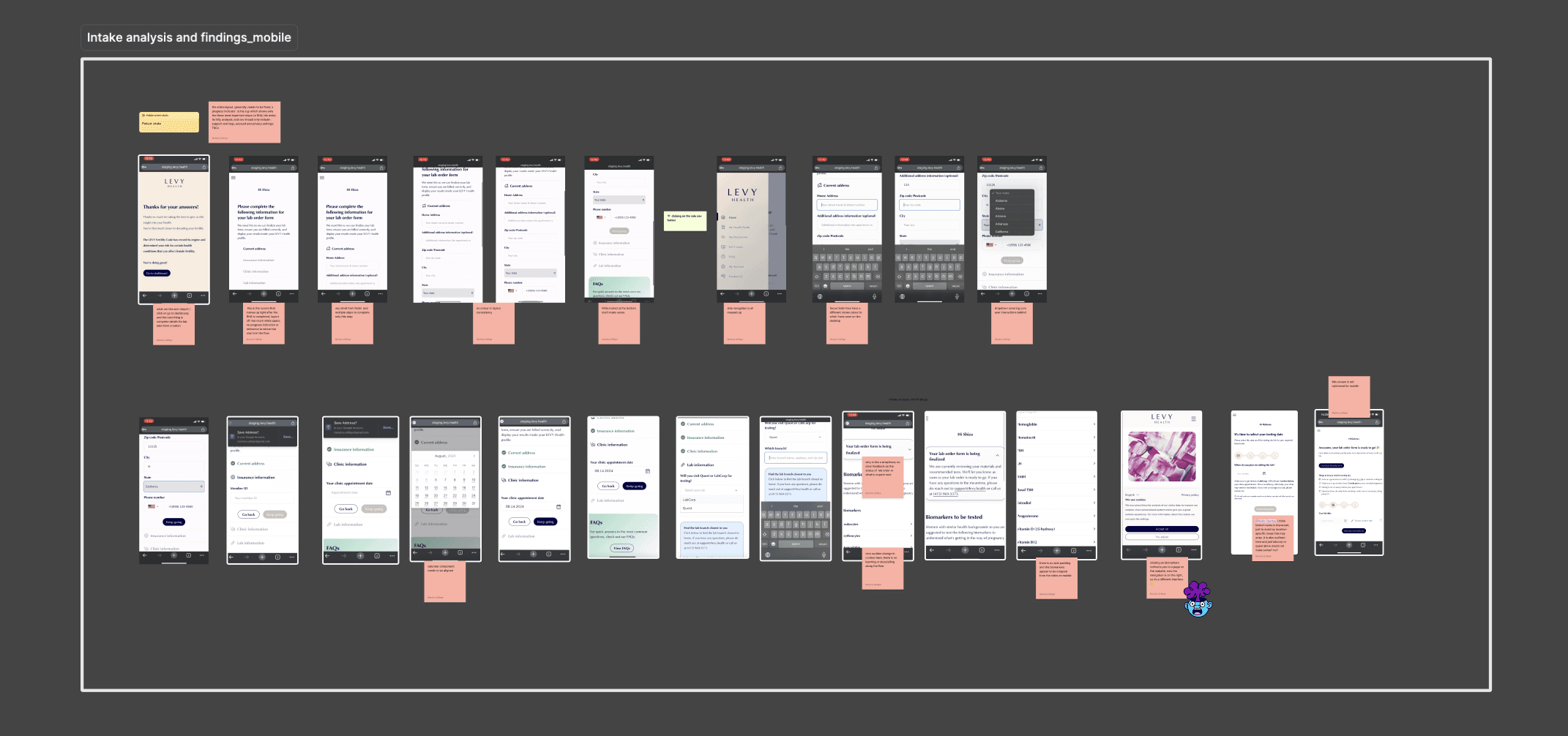
Alongside broader discovery, I ran targeted usability sessions to refine high-impact steps. One example involved the lab results upload flow for patients. Users needed a smoother path when bringing existing results into the platform. The session surfaced friction in selecting files, confirming upload status, and understanding next steps, which informed a streamlined interaction. View usability notes and findings
Process
From fragmented flows to a unified experience
Key outcomes
Reduced design-to-dev iteration time and improved cross-team alignment
Increased patient task completion rates and clarity in navigation
Enabled faster onboarding for new clinics through reusable modules
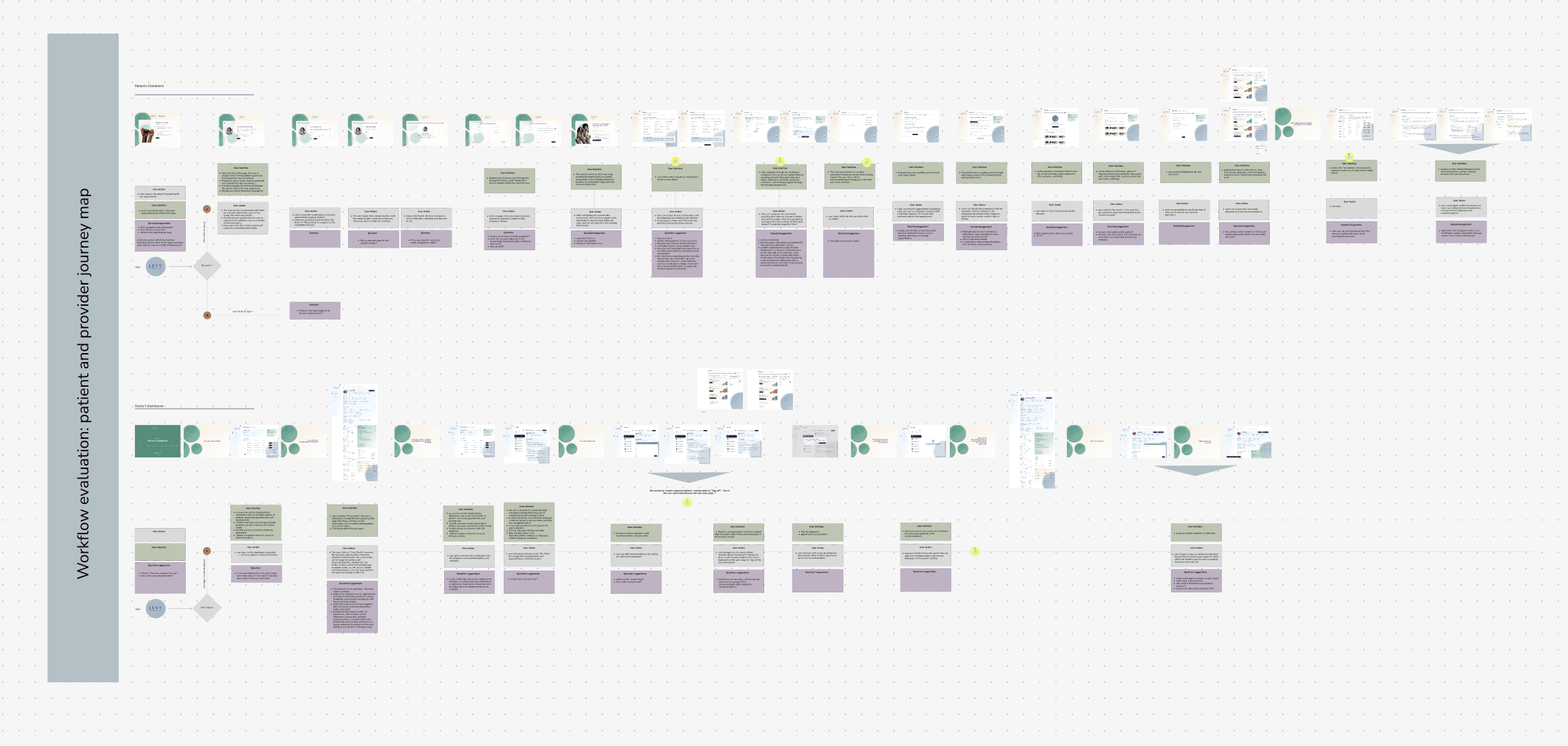
The product already had a strong technical foundation, but design decisions had been made in isolation as new clinics and features were added. My first step was to map the end-to-end patient and provider journeys to expose redundancies, dead ends, and inconsistent UI patterns across modules.
Through research synthesis and audit workshops with product and engineering, I identified overlapping logic and mismatched component behavior that slowed delivery and created unnecessary complexity for users.
To fix this, I built an adaptable design system in Figma that modularized common elements like onboarding, results interpretation, and provider dashboards. It allowed each clinic to configure their workflows without reinventing layouts or logic.
I also introduced iterative usability testing loops using Useberry, ensuring design changes were validated before engineering handoff. This reduced rework, improved alignment between teams, and made the product easier to scale.
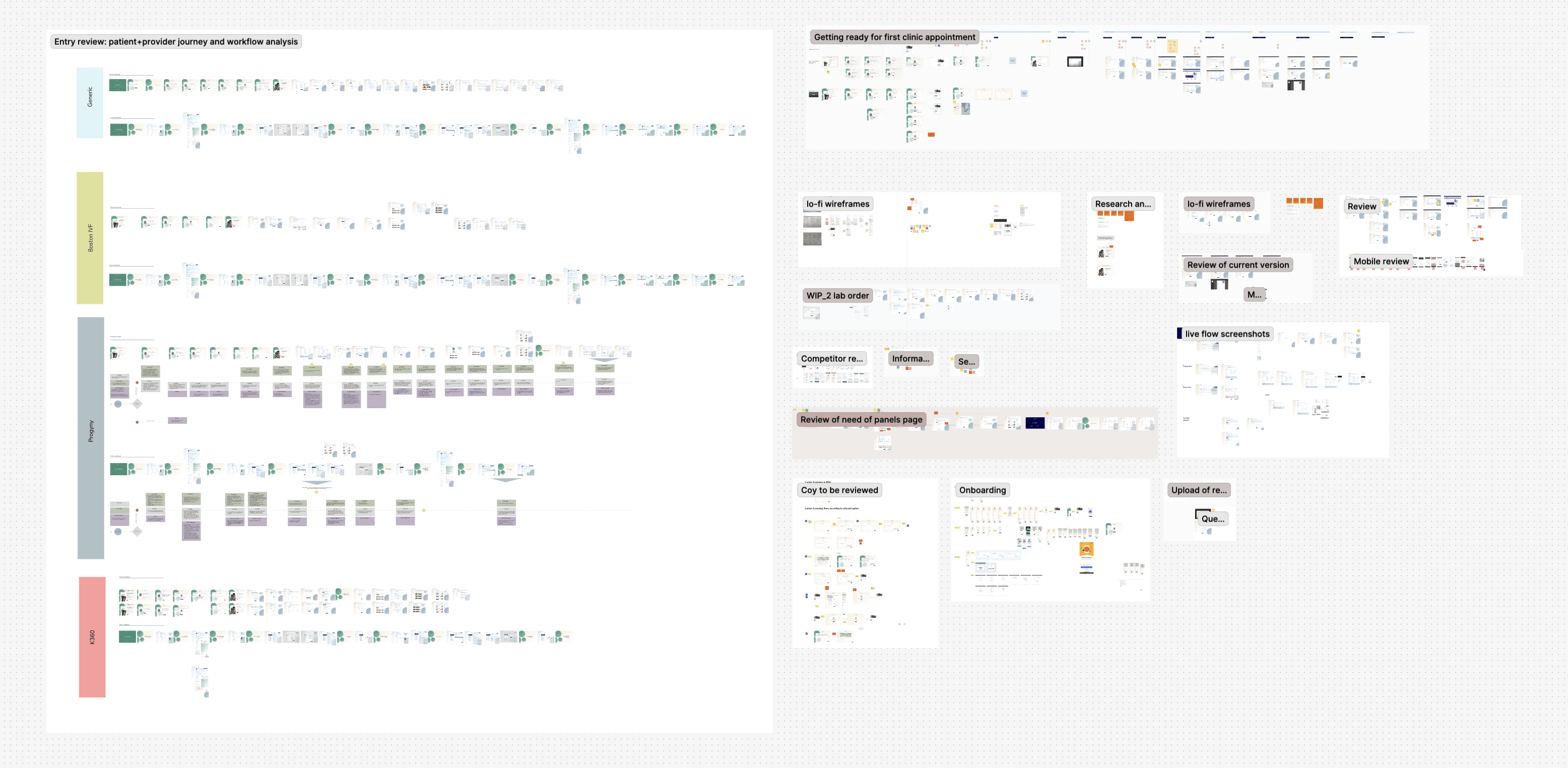
Foundational research review
Goal: Understand product context, constraints, and existing experience
Solution
Streamlining complexity through research-led design
My design approach focused on clear information flow, simplifying decisions, and removing friction so every step felt clear and purposeful for patients and providers. The screens below highlight improvements across key moments in the experience. I selected examples that show measurable gains in clarity and ease of use across the product.
Creating clarity across the patient journey
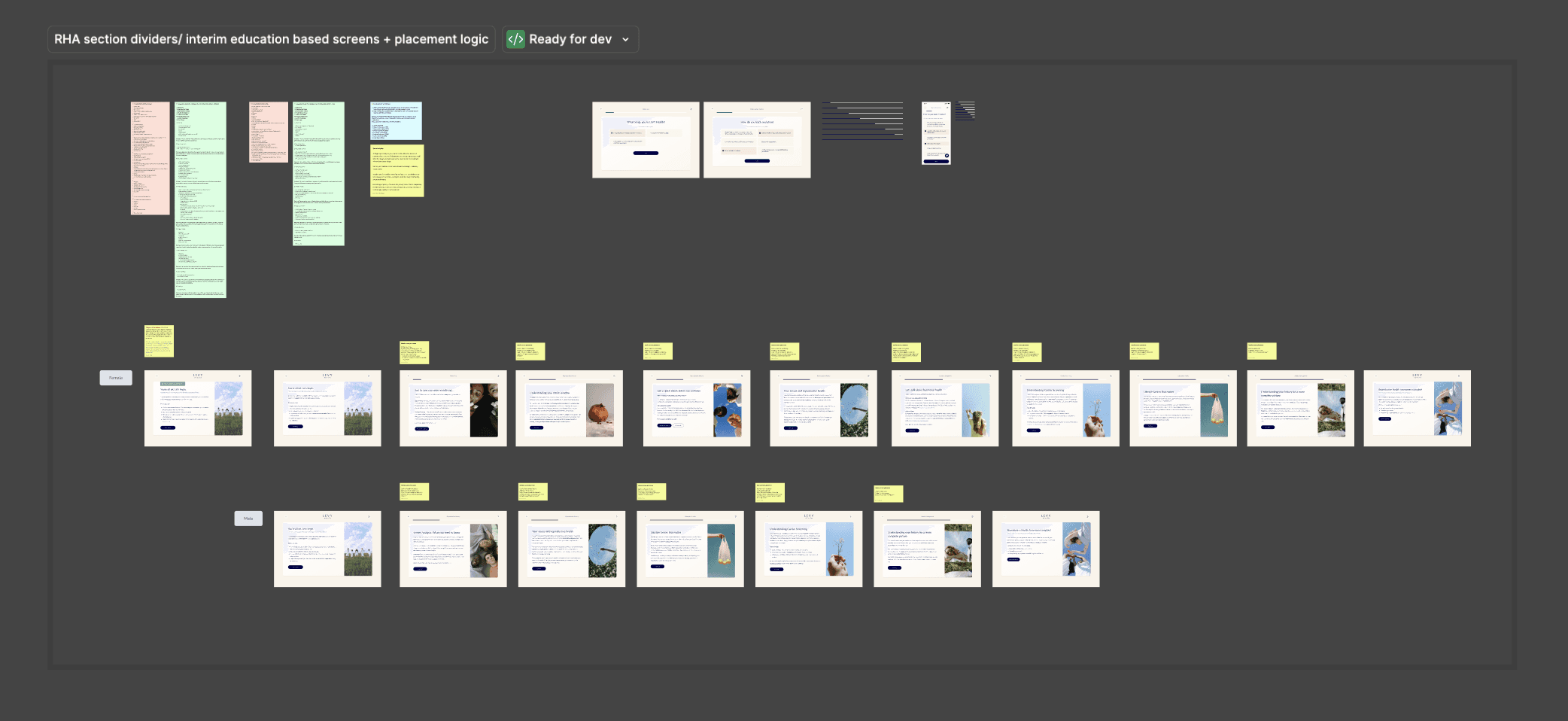
Reproductive Health Assessment & onboarding
Problem: The assessment felt long and clinical, with many questions presented upfront without context or a sense of progress. Many people stopped part-way because they did not understand why each detail mattered.
Solution: I reworked the assessment to guide patients step by step, with context, education, and clear language supporting each stage of the process.
Structured the flow into simple sections to make the experience easier to follow
Used conditional logic to tailor screens to individual needs and care paths
Wrote brief educational notes before key areas to explain purpose and prepare patients
Added precise UX copy to support understanding and reduce friction
Introduced progress indicators so patients always knew where they were in the journey
Enabled pause and return without losing place or context
Impact: Assessment completion rates improved by 20%, and users moved through the process with fewer questions and interruptions. (tracked in Amplitude)
Patient intake and task flow
Problem: Patients logged in without a dedicated home screen to understand where they stood. They entered the intake flow immediately, without a clear sense of pacing or how long the process would take. A list of steps appeared at the start, but once inside, visibility dropped. Patients lost track of progress, what they had finished, and what remained. This made it harder to move through the reproductive health assessment, lab scheduling, and preparation steps in order.
Solution: I organized the intake and task flow into one clear view so patients always knew what they had finished, what was next, and how to move forward without losing context.
Centralized progress, upcoming steps, and completed items in one screen
Used clear labels and plain language to support easy scanning and understanding
Assigned a single primary action per step to keep attention steady and reduce friction
Added a fixed bottom button so forward movement stayed consistent across screens
Kept completed steps visible with a Review option for reference and transparency
Impact: Users completed key setup actions 25% faster, and support requests during setup decreased after launch (tracked in Amplitude)
Recommended tests
Problem: Patients received test recommendations without context. Many didn’t understand why a particular panel was suggested or how it related to their overall journey, which caused confusion and delayed next steps.
Solution: I redesigned the Recommended tests page to support clarity, reduce effort, and guide patients through the information in a structured way.
Applied clear hierarchy to show key information first and reduce scanning time
Added plain-language explanations for each panel to support comprehension
Used consistent structure and labeling across panels for predictability
Introduced brief guidance on what happens next to reduce uncertainty
Linked to LEVY Learn resources inline so patients did not break context or leave the screen
Kept text concise to prevent overload and ensure attention stayed on the next action
Impact: Patients reported feeling more informed and engaged during testing. The redesign reduced unnecessary support queries and improved test completion rates across clinics.
Results timeline & preparation checklist
Problem: Patients did not have a reliable way to see status across the steps. If they tapped Lab visit completed too early, the preparation checklist for the upcoming visit disappeared and the page reduced to a waiting message. There was no clear path to view what remained before the visit or what would happen next.
Solution: I designed a results and preparation flow that kept guidance visible and accurate through each stage. Patients saw:
A clear timeline for lab order, lab visit, and results
A preparation checklist that stayed accessible
Dynamic prep steps based on the test type, such as semen analysis or carrier screening
Status labels that showed what was done and what remained
A single forward action that only progressed when the step was complete
This structure supported patients through setup and removed situations where they could lose access to preparation details or advance at the wrong time.
Impact: Patients completed pre-visit steps with fewer support needs, and intake moved forward without stalled states or missing guidance (tracked in Amplitude).
Designing for providers
Streamlining sensitive result workflows through structure and compliance
While I worked on several initiatives to improve provider efficiency and visibility, I’ve chosen to highlight this specific case because it best demonstrates how complex logic, compliance, and user experience came together in a single, high-impact solution.
The challenge
When I joined, the platform had no defined process for handling sensitive results such as sexually transmitted diseases (STDs). Providers were responsible for informing patients directly before results could be released, but there was no structure in place to guide or track that workflow.
This led to inconsistencies, compliance risks, and unnecessary manual coordination. Providers used external tools to log calls, make notes, and track who had been informed, with no central record or visibility into the process.
Understanding the complexity
Through research and feedback sessions with providers, coordinators, and compliance leads, I mapped the existing workflow from diagnosis to result release. The findings revealed several key issues:
No defined logic or control over result release sequencing
No visibility into which patients had been contacted or when
No way to audit communication history for compliance reviews
High cognitive load caused by switching between systems
The goal was to design a guided, trackable, and compliant flow that simplified decision-making without compromising clinical integrity.
The solution
I designed a compliance-driven workflow for managing sensitive cases in one place. Providers track results through a clear timeline and log all patient communication with notes and timestamps.
Once communication is confirmed, providers release results securely, with every step recorded for compliance. This replaced manual tracking with a structured, transparent process.
Impact
The new workflow lowered compliance risk for sensitive cases and supported smoother hand-offs across clinical teams. Providers reported more consistent tracking of results and fewer manual follow-up tasks. Internal data showed a drop in documentation errors, and clinics moved patients through the results release stage with greater efficiency.
Outcome & learnings
Measurable outcomes
Reduced onboarding time by 20% through clearer question grouping and guided progress indicators
Improved assessment completion rates by 20% with streamlined logic and steady in-flow support
Lowered manual tracking effort for providers by 25% through structured result-release workflows
Post-launch feedback showed a steady increase in patient understanding of results and next steps
These improvements transformed fragmented workflows into a connected experience that scales with LEVY Health’s expanding clinic network.
Reflection
Navigating complexity with structure and empathy
This project challenged me to balance clinical accuracy, usability, and technical limitations across a product already in motion. It taught me how to design within ambiguity while creating clarity for multiple user types and compliance-driven workflows.
Design system maturity
When I joined, there was no unified design language across the workflows. I built the foundation for a scalable system that improved accessibility, ensured visual consistency, and accelerated delivery.
What I did:
Established a flexible component library in Figma aligned with engineering needs
Defined shared tokens and patterns for clinic-level customization
Introduced design reviews to maintain consistency and alignment
Balancing compliance and care
Designing for healthcare meant navigating both logic and emotion. I worked closely with clinicians and compliance teams to translate regulatory complexity into experiences that felt simple and human.
What I did:
Defined safe, trackable patient-provider flows with compliance experts
Simplified technical logic into clear, intuitive interactions
Designed feedback mechanisms that guide without overwhelming
Key Takeaway
Working on this product reinforced that designing for healthcare is as much about systems thinking as it is about empathy. Real impact happens when complexity is organized rather than hidden, when every interaction, rule, and edge case contributes to a clearer and safer experience. The goal is not just to make things look simple but to make them genuinely understandable, dependable, and human.
Context
I joined Levy Health as Senior Product Designer while the product was already live. I tightened the experience, simplified workflows, and brought structure to an existing design system across patient and provider journeys. The work resulted in a cleaner, more reliable product, reduced friction, and steady improvement in engagement and conversion.
My role:
Senior Product Designer
Team:
Product Manager, Engineering Team, QA
Timeline:
Ongoing (active product)
Tools:
Figma, FigJam, Notion, Miro, Useberry
Business Model:
B2B2C Healthcare Platform
As a Product Designer, I…
• Reworked key patient and provider flows to simplify workflows and make steps clear and easy to act on
• Ran usability sessions to see where users got stuck, hear real feedback, and test improvements directly in the product
• Updated onboarding, assessments, documents, scheduling, and results so the journey felt steady, calm, and easy to finish
• Designed tools for providers to track progress, review results, and coordinate care without digging or switching screens
• Organised and rebuilt key parts of the design system to remove clutter, standardise components, and setting clearer usage rules for the team
• Worked side by side with engineering, product, and medical teams to turn clinical rules into screens and interactions that made sense
• Set up clear review points so decisions stayed aligned and the team moved with less back and forth
The problem
Complexity outpacing clarity
As more clinics joined the platform, unique requirements and logic multiplied faster than they could be standardized. Over time, the experience became fragmented, with disconnected workflows and inconsistent structures across journeys.
Patients often lost context mid-way, unsure what came next or why certain information was needed. Providers lacked a unified view of patient progress, results, and pending tasks, often resorting to manual tracking outside the platform.
The absence of hierarchy, consistent feedback, and shared design patterns slowed delivery and increased support requests. The challenge was not adding more functionality, but restoring focus, coherence, and trust across a product already in motion.
Research & insights
Understanding our users: Patients seeking clarity, Providers seeking visibility
Through user interviews and usability sessions with patients, clinicians, and care coordinators, I uncovered the following key insights:
Patients
Unclear next steps
Patients found it hard to tell where they were in the process or how close they were to finishing their workup. This made the experience feel longer and disconnected.
“It would help to see where I am in all of this.”
Lack of understanding behind recommendations
Patients wanted to know why they were recommended specific tests or next steps, and what those results meant. Guidance gaps made flow feel unpersonalized here.
“Why am I being recommended this test? What does it mean for me?”
Providers
Limited visibility across patients
Providers needed a better way to see patient progress at a glance. Without a unified view, it was harder to prioritize follow-ups and coordinate across the care team.
“It’s hard to see who’s waiting on what.”
Manual coordination slowing workflow
Providers often relied on spreadsheets or external notes to track status and results. This created extra work and opportunities for miscommunication across roles.
“We often double-check things that should already be clear.”
Focused usability validation: file upload flow
Alongside broader discovery, I ran targeted usability sessions to refine high-impact steps. One example involved the lab results upload flow for patients. Users needed a smoother path when bringing existing results into the platform. The session surfaced friction in selecting files, confirming upload status, and understanding next steps, which informed a streamlined interaction. View usability notes and findings
Process
From fragmented flows to a unified experience
Key outcomes
Reduced design-to-dev iteration time and improved cross-team alignment
Increased patient task completion rates and clarity in navigation
Enabled faster onboarding for new clinics through reusable modules
The product already had a strong technical foundation, but design decisions had been made in isolation as new clinics and features were added. My first step was to map the end-to-end patient and provider journeys to expose redundancies, dead ends, and inconsistent UI patterns across modules.
Through research synthesis and audit workshops with product and engineering, I identified overlapping logic and mismatched component behavior that slowed delivery and created unnecessary complexity for users.
To fix this, I built an adaptable design system in Figma that modularized common elements like onboarding, results interpretation, and provider dashboards. It allowed each clinic to configure their workflows without reinventing layouts or logic.
I also introduced iterative usability testing loops using Useberry, ensuring design changes were validated before engineering handoff. This reduced rework, improved alignment between teams, and made the product easier to scale.
Foundational research review
Goal: Understand product context, constraints, and existing experience
Solution
Streamlining complexity through research-led design
My design approach focused on clear information flow, simplifying decisions, and removing friction so every step felt clear and purposeful for patients and providers. The screens below highlight improvements across key moments in the experience. I selected examples that show measurable gains in clarity and ease of use across the product.
Creating clarity across the patient journey
Reproductive Health Assessment & onboarding
Problem: The assessment felt long and clinical, with many questions presented upfront without context or a sense of progress. Many people stopped part-way because they did not understand why each detail mattered.
Solution: I reworked the assessment to guide patients step by step, with context, education, and clear language supporting each stage of the process.
Structured the flow into simple sections to make the experience easier to follow
Used conditional logic to tailor screens to individual needs and care paths
Wrote brief educational notes before key areas to explain purpose and prepare patients
Added precise UX copy to support understanding and reduce friction
Introduced progress indicators so patients always knew where they were in the journey
Enabled pause and return without losing place or context
Impact: Assessment completion rates improved by 20%, and users moved through the process with fewer questions and interruptions. (tracked in Amplitude)
Patient intake and task flow
Problem: Patients logged in without a dedicated home screen to understand where they stood. They entered the intake flow immediately, without a clear sense of pacing or how long the process would take. A list of steps appeared at the start, but once inside, visibility dropped. Patients lost track of progress, what they had finished, and what remained. This made it harder to move through the reproductive health assessment, lab scheduling, and preparation steps in order.
Solution: I organized the intake and task flow into one clear view so patients always knew what they had finished, what was next, and how to move forward without losing context.
Centralized progress, upcoming steps, and completed items in one screen
Used clear labels and plain language to support easy scanning and understanding
Assigned a single primary action per step to keep attention steady and reduce friction
Added a fixed bottom button so forward movement stayed consistent across screens
Kept completed steps visible with a Review option for reference and transparency
Impact: Users completed key setup actions 25% faster, and support requests during setup decreased after launch (tracked in Amplitude)
Recommended tests
Problem: Patients received test recommendations without context. Many didn’t understand why a particular panel was suggested or how it related to their overall journey, which caused confusion and delayed next steps.
Solution: I redesigned the Recommended tests page to support clarity, reduce effort, and guide patients through the information in a structured way.
Applied clear hierarchy to show key information first and reduce scanning time
Added plain-language explanations for each panel to support comprehension
Used consistent structure and labeling across panels for predictability
Introduced brief guidance on what happens next to reduce uncertainty
Linked to LEVY Learn resources inline so patients did not break context or leave the screen
Kept text concise to prevent overload and ensure attention stayed on the next action
Impact: Patients reported feeling more informed and engaged during testing. The redesign reduced unnecessary support queries and improved test completion rates across clinics.
Results timeline & preparation checklist
Problem: Patients did not have a reliable way to see status across the steps. If they tapped Lab visit completed too early, the preparation checklist for the upcoming visit disappeared and the page reduced to a waiting message. There was no clear path to view what remained before the visit or what would happen next.
Solution: I designed a results and preparation flow that kept guidance visible and accurate through each stage. Patients saw:
A clear timeline for lab order, lab visit, and results
A preparation checklist that stayed accessible
Dynamic prep steps based on the test type, such as semen analysis or carrier screening
Status labels that showed what was done and what remained
A single forward action that only progressed when the step was complete
This structure supported patients through setup and removed situations where they could lose access to preparation details or advance at the wrong time.
Impact: Patients completed pre-visit steps with fewer support needs, and intake moved forward without stalled states or missing guidance (tracked in Amplitude).
Designing for providers
Streamlining sensitive result workflows through structure and compliance
While I worked on several initiatives to improve provider efficiency and visibility, I’ve chosen to highlight this specific case because it best demonstrates how complex logic, compliance, and user experience came together in a single, high-impact solution.
The challenge
When I joined, the platform had no defined process for handling sensitive results such as sexually transmitted diseases (STDs). Providers were responsible for informing patients directly before results could be released, but there was no structure in place to guide or track that workflow.
This led to inconsistencies, compliance risks, and unnecessary manual coordination. Providers used external tools to log calls, make notes, and track who had been informed, with no central record or visibility into the process.
Understanding the complexity
Through research and feedback sessions with providers, coordinators, and compliance leads, I mapped the existing workflow from diagnosis to result release. The findings revealed several key issues:
No defined logic or control over result release sequencing
No visibility into which patients had been contacted or when
No way to audit communication history for compliance reviews
High cognitive load caused by switching between systems
The goal was to design a guided, trackable, and compliant flow that simplified decision-making without compromising clinical integrity.
The solution
I designed a compliance-driven workflow for managing sensitive cases in one place. Providers track results through a clear timeline and log all patient communication with notes and timestamps.
Once communication is confirmed, providers release results securely, with every step recorded for compliance. This replaced manual tracking with a structured, transparent process.
Impact
The new workflow lowered compliance risk for sensitive cases and supported smoother hand-offs across clinical teams. Providers reported more consistent tracking of results and fewer manual follow-up tasks. Internal data showed a drop in documentation errors, and clinics moved patients through the results release stage with greater efficiency.
Outcome & learnings
Measurable outcomes
Reduced onboarding time by 20% through clearer question grouping and guided progress indicators
Improved assessment completion rates by 20% with streamlined logic and steady in-flow support
Lowered manual tracking effort for providers by 25% through structured result-release workflows
Post-launch feedback showed a steady increase in patient understanding of results and next steps
These improvements transformed fragmented workflows into a connected experience that scales with LEVY Health’s expanding clinic network.
Reflection
Navigating complexity with structure and empathy
This project challenged me to balance clinical accuracy, usability, and technical limitations across a product already in motion. It taught me how to design within ambiguity while creating clarity for multiple user types and compliance-driven workflows.
Design system maturity
When I joined, there was no unified design language across the workflows. I built the foundation for a scalable system that improved accessibility, ensured visual consistency, and accelerated delivery.
What I did:
Established a flexible component library in Figma aligned with engineering needs
Defined shared tokens and patterns for clinic-level customization
Introduced design reviews to maintain consistency and alignment
Balancing compliance and care
Designing for healthcare meant navigating both logic and emotion. I worked closely with clinicians and compliance teams to translate regulatory complexity into experiences that felt simple and human.
What I did:
Defined safe, trackable patient-provider flows with compliance experts
Simplified technical logic into clear, intuitive interactions
Designed feedback mechanisms that guide without overwhelming
Key Takeaway
Working on this product reinforced that designing for healthcare is as much about systems thinking as it is about empathy. Real impact happens when complexity is organized rather than hidden, when every interaction, rule, and edge case contributes to a clearer and safer experience. The goal is not just to make things look simple but to make them genuinely understandable, dependable, and human.
As a Product Designer, I…
• Reworked key patient and provider flows to simplify workflows and make steps clear and easy to act on
• Ran usability sessions to see where users got stuck, hear real feedback, and test improvements directly in the product
• Updated onboarding, assessments, documents, scheduling, and results so the journey felt steady, calm, and easy to finish
• Designed tools for providers to track progress, review results, and coordinate care without digging or switching screens
• Organised and rebuilt key parts of the design system to remove clutter, standardise components, and setting clearer usage rules for the team
• Worked side by side with engineering, product, and medical teams to turn clinical rules into screens and interactions that made sense
• Set up clear review points so decisions stayed aligned and the team moved with less back and forth
The problem
Complexity outpacing clarity
As more clinics joined the platform, unique requirements and logic multiplied faster than they could be standardized. Over time, the experience became fragmented, with disconnected workflows and inconsistent structures across journeys.
Patients often lost context mid-way, unsure what came next or why certain information was needed. Providers lacked a unified view of patient progress, results, and pending tasks, often resorting to manual tracking outside the platform.
The absence of hierarchy, consistent feedback, and shared design patterns slowed delivery and increased support requests. The challenge was not adding more functionality, but restoring focus, coherence, and trust across a product already in motion.
Research & insights
Understanding our users: Patients seeking clarity, Providers seeking visibility
Through user interviews and usability sessions with patients, clinicians, and care coordinators, I uncovered the following key insights:
Patients
Unclear next steps
Patients found it hard to tell where they were in the process or how close they were to finishing their workup. This made the experience feel longer and disconnected.
“It would help to see where I am in all of this.”
Lack of understanding behind recommendations
Patients wanted to know why they were recommended specific tests or next steps, and what those results meant. Guidance gaps made flow feel unpersonalized here.
“Why am I being recommended this test? What does it mean for me?”
Providers
Limited visibility across patients
Providers needed a better way to see patient progress at a glance. Without a unified view, it was harder to prioritize follow-ups and coordinate across the care team.
“It’s hard to see who’s waiting on what.”
Manual coordination slowing workflow
Providers often relied on spreadsheets or external notes to track status and results. This created extra work and opportunities for miscommunication across roles.
“We often double-check things that should already be clear.”
Focused usability validation: file upload flow
Alongside broader discovery, I ran targeted usability sessions to refine high-impact steps. One example involved the lab results upload flow for patients. Users needed a smoother path when bringing existing results into the platform. The session surfaced friction in selecting files, confirming upload status, and understanding next steps, which informed a streamlined interaction. View usability notes and findings
Process
From fragmented flows to a unified experience
Key outcomes
Reduced design-to-dev iteration time and improved cross-team alignment
Increased patient task completion rates and clarity in navigation
Enabled faster onboarding for new clinics through reusable modules
The product already had a strong technical foundation, but design decisions had been made in isolation as new clinics and features were added. My first step was to map the end-to-end patient and provider journeys to expose redundancies, dead ends, and inconsistent UI patterns across modules.
Through research synthesis and audit workshops with product and engineering, I identified overlapping logic and mismatched component behavior that slowed delivery and created unnecessary complexity for users.
To fix this, I built an adaptable design system in Figma that modularized common elements like onboarding, results interpretation, and provider dashboards. It allowed each clinic to configure their workflows without reinventing layouts or logic.
I also introduced iterative usability testing loops using Useberry, ensuring design changes were validated before engineering handoff. This reduced rework, improved alignment between teams, and made the product easier to scale.
Foundational research review
Goal: Understand product context, constraints, and existing experience
Solution
Streamlining complexity through research-led design
My design approach focused on clear information flow, simplifying decisions, and removing friction so every step felt clear and purposeful for patients and providers. The screens below highlight improvements across key moments in the experience. I selected examples that show measurable gains in clarity and ease of use across the product.
Creating clarity across the patient journey
Reproductive Health Assessment & onboarding
Problem: The assessment felt long and clinical, with many questions presented upfront without context or a sense of progress. Many people stopped part-way because they did not understand why each detail mattered.
Solution: I reworked the assessment to guide patients step by step, with context, education, and clear language supporting each stage of the process.
Structured the flow into simple sections to make the experience easier to follow
Used conditional logic to tailor screens to individual needs and care paths
Wrote brief educational notes before key areas to explain purpose and prepare patients
Added precise UX copy to support understanding and reduce friction
Introduced progress indicators so patients always knew where they were in the journey
Enabled pause and return without losing place or context
Impact: Assessment completion rates improved by 20%, and users moved through the process with fewer questions and interruptions. (tracked in Amplitude)
Patient intake and task flow
Problem: Patients logged in without a dedicated home screen to understand where they stood. They entered the intake flow immediately, without a clear sense of pacing or how long the process would take. A list of steps appeared at the start, but once inside, visibility dropped. Patients lost track of progress, what they had finished, and what remained. This made it harder to move through the reproductive health assessment, lab scheduling, and preparation steps in order.
Solution: I organized the intake and task flow into one clear view so patients always knew what they had finished, what was next, and how to move forward without losing context.
Centralized progress, upcoming steps, and completed items in one screen
Used clear labels and plain language to support easy scanning and understanding
Assigned a single primary action per step to keep attention steady and reduce friction
Added a fixed bottom button so forward movement stayed consistent across screens
Kept completed steps visible with a Review option for reference and transparency
Impact: Users completed key setup actions 25% faster, and support requests during setup decreased after launch (tracked in Amplitude)
Recommended tests
Problem: Patients received test recommendations without context. Many didn’t understand why a particular panel was suggested or how it related to their overall journey, which caused confusion and delayed next steps.
Solution: I redesigned the Recommended tests page to support clarity, reduce effort, and guide patients through the information in a structured way.
Applied clear hierarchy to show key information first and reduce scanning time
Added plain-language explanations for each panel to support comprehension
Used consistent structure and labeling across panels for predictability
Introduced brief guidance on what happens next to reduce uncertainty
Linked to LEVY Learn resources inline so patients did not break context or leave the screen
Kept text concise to prevent overload and ensure attention stayed on the next action
Impact: Patients reported feeling more informed and engaged during testing. The redesign reduced unnecessary support queries and improved test completion rates across clinics.
Results timeline & preparation checklist
Problem: Patients did not have a reliable way to see status across the steps. If they tapped Lab visit completed too early, the preparation checklist for the upcoming visit disappeared and the page reduced to a waiting message. There was no clear path to view what remained before the visit or what would happen next.
Solution: I designed a results and preparation flow that kept guidance visible and accurate through each stage. Patients saw:
A clear timeline for lab order, lab visit, and results
A preparation checklist that stayed accessible
Dynamic prep steps based on the test type, such as semen analysis or carrier screening
Status labels that showed what was done and what remained
A single forward action that only progressed when the step was complete
This structure supported patients through setup and removed situations where they could lose access to preparation details or advance at the wrong time.
Impact: Patients completed pre-visit steps with fewer support needs, and intake moved forward without stalled states or missing guidance (tracked in Amplitude).
Designing for providers
Streamlining sensitive result workflows through structure and compliance
While I worked on several initiatives to improve provider efficiency and visibility, I’ve chosen to highlight this specific case because it best demonstrates how complex logic, compliance, and user experience came together in a single, high-impact solution.
The challenge
When I joined, the platform had no defined process for handling sensitive results such as sexually transmitted diseases (STDs). Providers were responsible for informing patients directly before results could be released, but there was no structure in place to guide or track that workflow.
This led to inconsistencies, compliance risks, and unnecessary manual coordination. Providers used external tools to log calls, make notes, and track who had been informed, with no central record or visibility into the process.
Understanding the complexity
Through research and feedback sessions with providers, coordinators, and compliance leads, I mapped the existing workflow from diagnosis to result release. The findings revealed several key issues:
No defined logic or control over result release sequencing
No visibility into which patients had been contacted or when
No way to audit communication history for compliance reviews
High cognitive load caused by switching between systems
The goal was to design a guided, trackable, and compliant flow that simplified decision-making without compromising clinical integrity.
The solution
I designed a compliance-driven workflow for managing sensitive cases in one place. Providers track results through a clear timeline and log all patient communication with notes and timestamps.
Once communication is confirmed, providers release results securely, with every step recorded for compliance. This replaced manual tracking with a structured, transparent process.
Impact
The new workflow lowered compliance risk for sensitive cases and supported smoother hand-offs across clinical teams. Providers reported more consistent tracking of results and fewer manual follow-up tasks. Internal data showed a drop in documentation errors, and clinics moved patients through the results release stage with greater efficiency.
Outcome & learnings
Measurable outcomes
Reduced onboarding time by 20% through clearer question grouping and guided progress indicators
Improved assessment completion rates by 20% with streamlined logic and steady in-flow support
Lowered manual tracking effort for providers by 25% through structured result-release workflows
Post-launch feedback showed a steady increase in patient understanding of results and next steps
These improvements transformed fragmented workflows into a connected experience that scales with LEVY Health’s expanding clinic network.
Reflection
Navigating complexity with structure and empathy
This project challenged me to balance clinical accuracy, usability, and technical limitations across a product already in motion. It taught me how to design within ambiguity while creating clarity for multiple user types and compliance-driven workflows.
Design system maturity
When I joined, there was no unified design language across the workflows. I built the foundation for a scalable system that improved accessibility, ensured visual consistency, and accelerated delivery.
What I did:
Established a flexible component library in Figma aligned with engineering needs
Defined shared tokens and patterns for clinic-level customization
Introduced design reviews to maintain consistency and alignment
Balancing compliance and care
Designing for healthcare meant navigating both logic and emotion. I worked closely with clinicians and compliance teams to translate regulatory complexity into experiences that felt simple and human.
What I did:
Defined safe, trackable patient-provider flows with compliance experts
Simplified technical logic into clear, intuitive interactions
Designed feedback mechanisms that guide without overwhelming
Key Takeaway
Working on this product reinforced that designing for healthcare is as much about systems thinking as it is about empathy. Real impact happens when complexity is organized rather than hidden, when every interaction, rule, and edge case contributes to a clearer and safer experience. The goal is not just to make things look simple but to make them genuinely understandable, dependable, and human.
Context
I joined Levy Health as Senior Product Designer while the product was already live. I tightened the experience, simplified workflows, and brought structure to an existing design system across patient and provider journeys. The work resulted in a cleaner, more reliable product, reduced friction, and steady improvement in engagement and conversion.
My role:
Senior Product Designer
Team:
Product Manager, Engineering Team, QA
Timeline:
Ongoing (active product)
Tools:
Figma, FigJam, Notion, Miro, Useberry
Business Model:
B2B2C Healthcare Platform
As a Product Designer, I…
• Reworked key patient and provider flows to simplify workflows and make steps clear and easy to act on
• Ran usability sessions to see where users got stuck, hear real feedback, and test improvements directly in the product
• Updated onboarding, assessments, documents, scheduling, and results so the journey felt steady, calm, and easy to finish
• Designed tools for providers to track progress, review results, and coordinate care without digging or switching screens
• Organised and rebuilt key parts of the design system to remove clutter, standardise components, and setting clearer usage rules for the team
• Worked side by side with engineering, product, and medical teams to turn clinical rules into screens and interactions that made sense
• Set up clear review points so decisions stayed aligned and the team moved with less back and forth
The problem
Complexity outpacing clarity
As more clinics joined the platform, unique requirements and logic multiplied faster than they could be standardized. Over time, the experience became fragmented, with disconnected workflows and inconsistent structures across journeys.
Patients often lost context mid-way, unsure what came next or why certain information was needed. Providers lacked a unified view of patient progress, results, and pending tasks, often resorting to manual tracking outside the platform.
The absence of hierarchy, consistent feedback, and shared design patterns slowed delivery and increased support requests. The challenge was not adding more functionality, but restoring focus, coherence, and trust across a product already in motion.
Research & insights
Understanding our users: Patients seeking clarity, Providers seeking visibility
Through user interviews and usability sessions with patients, clinicians, and care coordinators, I uncovered the following key insights:
Patients
Unclear next steps
Patients found it hard to tell where they were in the process or how close they were to finishing their workup. This made the experience feel longer and disconnected.
“It would help to see where I am in all of this.”
Lack of understanding behind recommendations
Patients wanted to know why they were recommended specific tests or next steps, and what those results meant. Guidance gaps made flow feel unpersonalized here.
“Why am I being recommended this test? What does it mean for me?”
Providers
Limited visibility across patients
Providers needed a better way to see patient progress at a glance. Without a unified view, it was harder to prioritize follow-ups and coordinate across the care team.
“It’s hard to see who’s waiting on what.”
Manual coordination slowing workflow
Providers often relied on spreadsheets or external notes to track status and results. This created extra work and opportunities for miscommunication across roles.
“We often double-check things that should already be clear.”
Focused usability validation: file upload flow
Alongside broader discovery, I ran targeted usability sessions to refine high-impact steps. One example involved the lab results upload flow for patients. Users needed a smoother path when bringing existing results into the platform. The session surfaced friction in selecting files, confirming upload status, and understanding next steps, which informed a streamlined interaction. View usability notes and findings
Process
From fragmented flows to a unified experience
Key outcomes
Reduced design-to-dev iteration time and improved cross-team alignment
Increased patient task completion rates and clarity in navigation
Enabled faster onboarding for new clinics through reusable modules
The product already had a strong technical foundation, but design decisions had been made in isolation as new clinics and features were added. My first step was to map the end-to-end patient and provider journeys to expose redundancies, dead ends, and inconsistent UI patterns across modules.
Through research synthesis and audit workshops with product and engineering, I identified overlapping logic and mismatched component behavior that slowed delivery and created unnecessary complexity for users.
To fix this, I built an adaptable design system in Figma that modularized common elements like onboarding, results interpretation, and provider dashboards. It allowed each clinic to configure their workflows without reinventing layouts or logic.
I also introduced iterative usability testing loops using Useberry, ensuring design changes were validated before engineering handoff. This reduced rework, improved alignment between teams, and made the product easier to scale.
Foundational research review
Goal: Understand product context, constraints, and existing experience
Solution
Streamlining complexity through research-led design
My design approach focused on clear information flow, simplifying decisions, and removing friction so every step felt clear and purposeful for patients and providers. The screens below highlight improvements across key moments in the experience. I selected examples that show measurable gains in clarity and ease of use across the product.
Creating clarity across the patient journey
Reproductive Health Assessment & onboarding
Problem: The assessment felt long and clinical, with many questions presented upfront without context or a sense of progress. Many people stopped part-way because they did not understand why each detail mattered.
Solution: I reworked the assessment to guide patients step by step, with context, education, and clear language supporting each stage of the process.
Structured the flow into simple sections to make the experience easier to follow
Used conditional logic to tailor screens to individual needs and care paths
Wrote brief educational notes before key areas to explain purpose and prepare patients
Added precise UX copy to support understanding and reduce friction
Introduced progress indicators so patients always knew where they were in the journey
Enabled pause and return without losing place or context
Impact: Assessment completion rates improved by 20%, and users moved through the process with fewer questions and interruptions. (tracked in Amplitude)
Patient intake and task flow
Problem: Patients logged in without a dedicated home screen to understand where they stood. They entered the intake flow immediately, without a clear sense of pacing or how long the process would take. A list of steps appeared at the start, but once inside, visibility dropped. Patients lost track of progress, what they had finished, and what remained. This made it harder to move through the reproductive health assessment, lab scheduling, and preparation steps in order.
Solution: I organized the intake and task flow into one clear view so patients always knew what they had finished, what was next, and how to move forward without losing context.
Centralized progress, upcoming steps, and completed items in one screen
Used clear labels and plain language to support easy scanning and understanding
Assigned a single primary action per step to keep attention steady and reduce friction
Added a fixed bottom button so forward movement stayed consistent across screens
Kept completed steps visible with a Review option for reference and transparency
Impact: Users completed key setup actions 25% faster, and support requests during setup decreased after launch (tracked in Amplitude)
Recommended tests
Problem: Patients received test recommendations without context. Many didn’t understand why a particular panel was suggested or how it related to their overall journey, which caused confusion and delayed next steps.
Solution: I redesigned the Recommended tests page to support clarity, reduce effort, and guide patients through the information in a structured way.
Applied clear hierarchy to show key information first and reduce scanning time
Added plain-language explanations for each panel to support comprehension
Used consistent structure and labeling across panels for predictability
Introduced brief guidance on what happens next to reduce uncertainty
Linked to LEVY Learn resources inline so patients did not break context or leave the screen
Kept text concise to prevent overload and ensure attention stayed on the next action
Impact: Patients reported feeling more informed and engaged during testing. The redesign reduced unnecessary support queries and improved test completion rates across clinics.
Results timeline & preparation checklist
Problem: Patients did not have a reliable way to see status across the steps. If they tapped Lab visit completed too early, the preparation checklist for the upcoming visit disappeared and the page reduced to a waiting message. There was no clear path to view what remained before the visit or what would happen next.
Solution: I designed a results and preparation flow that kept guidance visible and accurate through each stage. Patients saw:
A clear timeline for lab order, lab visit, and results
A preparation checklist that stayed accessible
Dynamic prep steps based on the test type, such as semen analysis or carrier screening
Status labels that showed what was done and what remained
A single forward action that only progressed when the step was complete
This structure supported patients through setup and removed situations where they could lose access to preparation details or advance at the wrong time.
Impact: Patients completed pre-visit steps with fewer support needs, and intake moved forward without stalled states or missing guidance (tracked in Amplitude).
Designing for providers
Streamlining sensitive result workflows through structure and compliance
While I worked on several initiatives to improve provider efficiency and visibility, I’ve chosen to highlight this specific case because it best demonstrates how complex logic, compliance, and user experience came together in a single, high-impact solution.
The challenge
When I joined, the platform had no defined process for handling sensitive results such as sexually transmitted diseases (STDs). Providers were responsible for informing patients directly before results could be released, but there was no structure in place to guide or track that workflow.
This led to inconsistencies, compliance risks, and unnecessary manual coordination. Providers used external tools to log calls, make notes, and track who had been informed, with no central record or visibility into the process.
Understanding the complexity
Through research and feedback sessions with providers, coordinators, and compliance leads, I mapped the existing workflow from diagnosis to result release. The findings revealed several key issues:
No defined logic or control over result release sequencing
No visibility into which patients had been contacted or when
No way to audit communication history for compliance reviews
High cognitive load caused by switching between systems
The goal was to design a guided, trackable, and compliant flow that simplified decision-making without compromising clinical integrity.
The solution
I designed a compliance-driven workflow for managing sensitive cases in one place. Providers track results through a clear timeline and log all patient communication with notes and timestamps.
Once communication is confirmed, providers release results securely, with every step recorded for compliance. This replaced manual tracking with a structured, transparent process.
Impact
The new workflow lowered compliance risk for sensitive cases and supported smoother hand-offs across clinical teams. Providers reported more consistent tracking of results and fewer manual follow-up tasks. Internal data showed a drop in documentation errors, and clinics moved patients through the results release stage with greater efficiency.
Outcome & learnings
Measurable outcomes
Reduced onboarding time by 20% through clearer question grouping and guided progress indicators
Improved assessment completion rates by 20% with streamlined logic and steady in-flow support
Lowered manual tracking effort for providers by 25% through structured result-release workflows
Post-launch feedback showed a steady increase in patient understanding of results and next steps
These improvements transformed fragmented workflows into a connected experience that scales with LEVY Health’s expanding clinic network.
Reflection
Navigating complexity with structure and empathy
This project challenged me to balance clinical accuracy, usability, and technical limitations across a product already in motion. It taught me how to design within ambiguity while creating clarity for multiple user types and compliance-driven workflows.
Design system maturity
When I joined, there was no unified design language across the workflows. I built the foundation for a scalable system that improved accessibility, ensured visual consistency, and accelerated delivery.
What I did:
Established a flexible component library in Figma aligned with engineering needs
Defined shared tokens and patterns for clinic-level customization
Introduced design reviews to maintain consistency and alignment
Balancing compliance and care
Designing for healthcare meant navigating both logic and emotion. I worked closely with clinicians and compliance teams to translate regulatory complexity into experiences that felt simple and human.
What I did:
Defined safe, trackable patient-provider flows with compliance experts
Simplified technical logic into clear, intuitive interactions
Designed feedback mechanisms that guide without overwhelming
Key Takeaway
Working on this product reinforced that designing for healthcare is as much about systems thinking as it is about empathy. Real impact happens when complexity is organized rather than hidden, when every interaction, rule, and edge case contributes to a clearer and safer experience. The goal is not just to make things look simple but to make them genuinely understandable, dependable, and human.