Context
I designed Hermaid’s web platform as an adaptive framework linking medical insight, user intent, and brand communication. The outcome is a scalable system that structures information flow, decision logic, and visual design into one cohesive product.
My role:
Team:
Timeline:
Tools:
Business Model:

From idea to system
Hermaid is a digital product built to bring structure to women’s hormonal health. I led the design of the platform end to end, defining its experience architecture, product logic, and visual identity.
Working directly with the founder, I built Hermaid as a product that translates medical complexity into structured, navigable design. The outcome was not just a user interface, but an entire framework for how information becomes experience.
Where we started
Hermaid began as a clinical concept without form. No product existed, only research, scattered datasets, and a goal to help users understand and act on their hormonal health.
The initial challenge was multidimensional:
• Translate clinical research into a usable product language.
• Build an experience from zero that balances precision with accessibility.
• Create a scalable design system flexible enough to grow with future health modules.
This was not a redesign problem. It was a product architecture problem.

Framing the logic
Before moving into design, I focused on building the strategic and behavioral logic that would guide Hermaid’s product foundation.
The process began by mapping what we knew, what users needed, and what the product could realistically deliver. Working closely with the founder, I established research goals around comprehension, usability, and trust, exploring how people interpret medical content, what creates friction, and where current solutions fall short.
Research activities
To ground decisions in evidence, I conducted a structured research cycle that included:
• Stakeholder and expert sessions to translate clinical data into actionable design requirements.
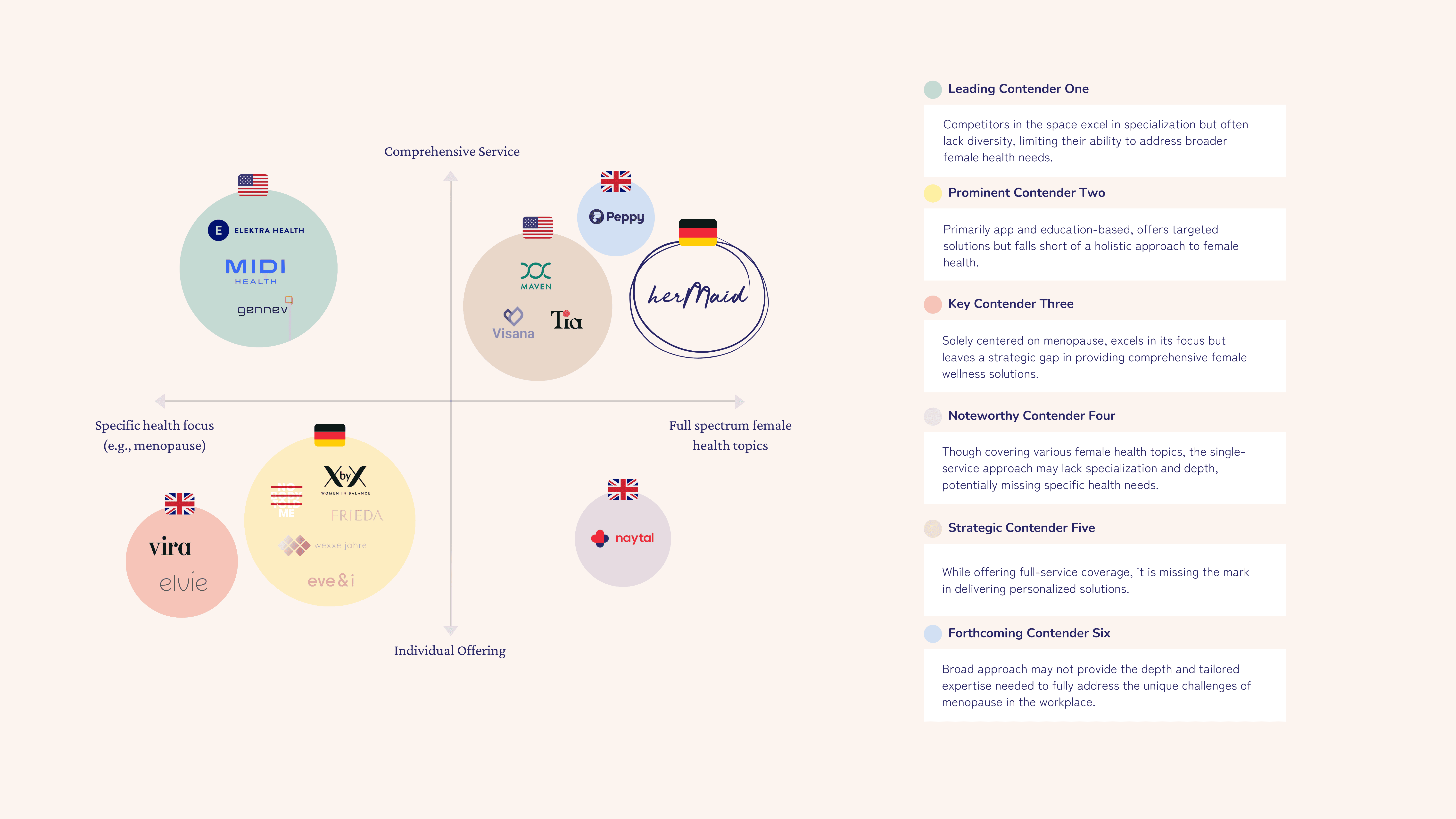
• Competitor analysis across health and AI guidance platforms to benchmark usability, tone, and visual communication patterns.
• User interviews and behavior mapping to uncover how people navigate hormonal health information and identify emotional triggers in their digital experience.
• Usability reviews of early prototypes to assess comprehension, flow, and information hierarchy.
Key Insights
The research revealed clear opportunity areas:
• Users wanted guided understanding, not passive reading. They valued structured explanations over diagnostic assumptions.
• Existing tools lacked contextual flow. Information felt fragmented and reactive rather than connected to a journey.
• Trust was built through tone, transparency, and credible content, not volume of data.
The solution
With a clear logic and research foundation in place, I translated Hermaid’s strategy into a cohesive product experience that connects science, design, and usability.
Experience architecture
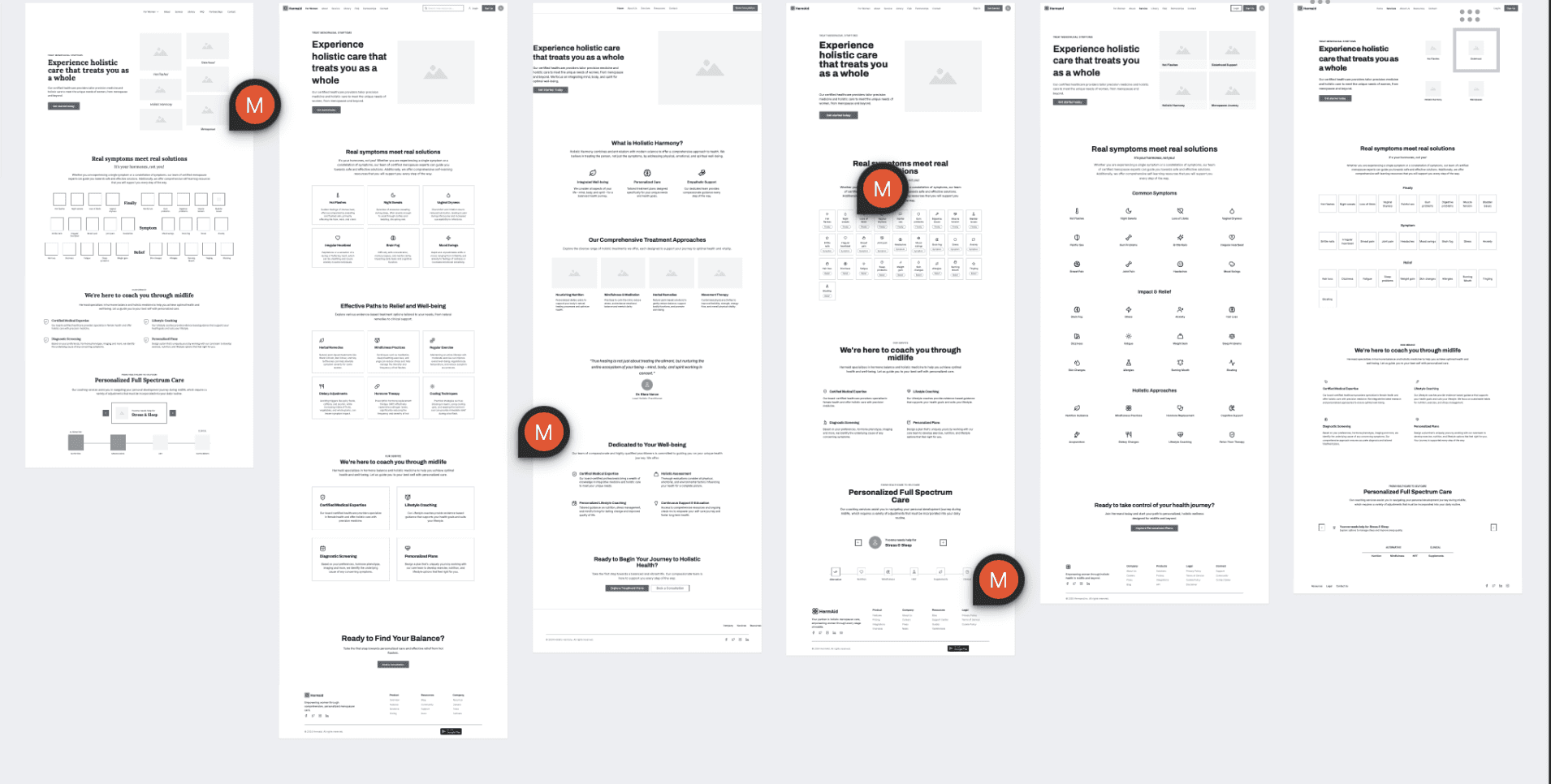
I designed Hermaid’s architecture as a modular framework that supports evolving use cases. Each user journey was mapped around clarity and context, from symptom exploration to personalised insights and educational resources.
• Defined information hierarchy that enables quick scanning without losing medical depth.
• Created progressive disclosure flows that reveal complexity only when needed.
• Structured branching paths to handle multiple hormonal conditions and future data modules.
Interface design
The interface was designed for clarity, balance, and credibility. Visual hierarchy and micro-interactions guided users intuitively through key actions while maintaining clinical reliability.
• Crafted layouts with clean segmentation of data, actions, and explanations.
• Applied a consistent grid and typographic system optimised for readability and trust.
• Integrated tone-guided microcopy that humanised medical terminology without oversimplifying it.
Visual and brand system
To unify communication, I developed Hermaid’s visual identity and design language as extensions of its UX logic.
• Introduced a neutral palette that blends clinical precision with approachability.
• Designed a set of illustrations and iconography to explain complex hormonal cycles visually.
• Defined content tone guidelines ensuring consistency across UX copy, resources, and media touchpoint.
Scalability and system design
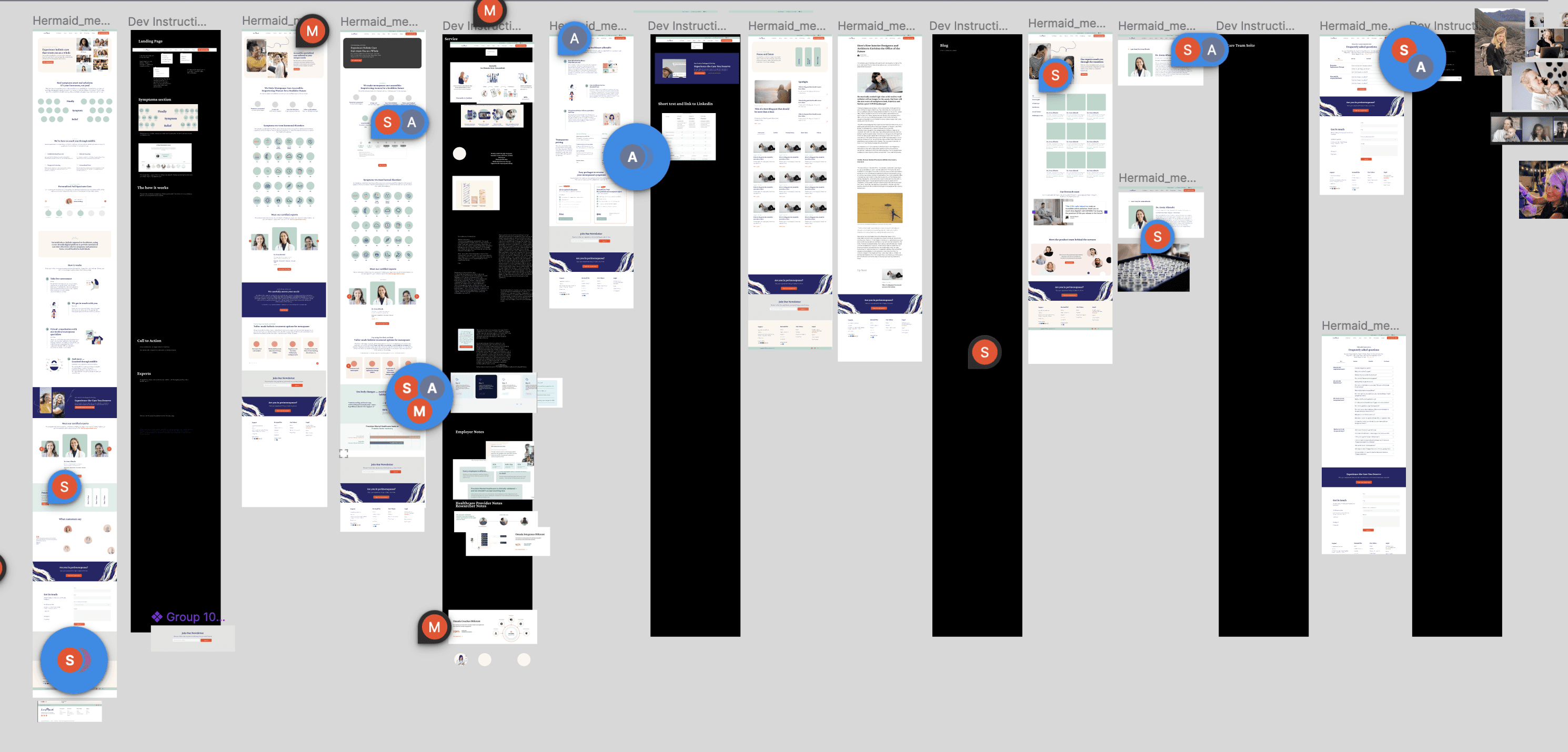
I built Hermaid’s design system to scale seamlessly across product and brand layers.
• Developed reusable components and interaction patterns for new modules.
• Documented the system within Figma and Notion to enable efficient iteration.
• Established alignment between visual hierarchy, content architecture, and development handoff.
Impact
The unified design logic and system improved both usability and production efficiency.
• Reduced information friction by structuring guidance around user intent.
• Increased consistency across digital touchpoints, reducing rework for future features.
• Enabled faster design to development workflows through a modular, documented system.
Hermaid evolved into a cohesive digital ecosystem, not just a product but a structured experience framework where medical data becomes accessible, actionable, and human.
Extending into content: The Podcast experience
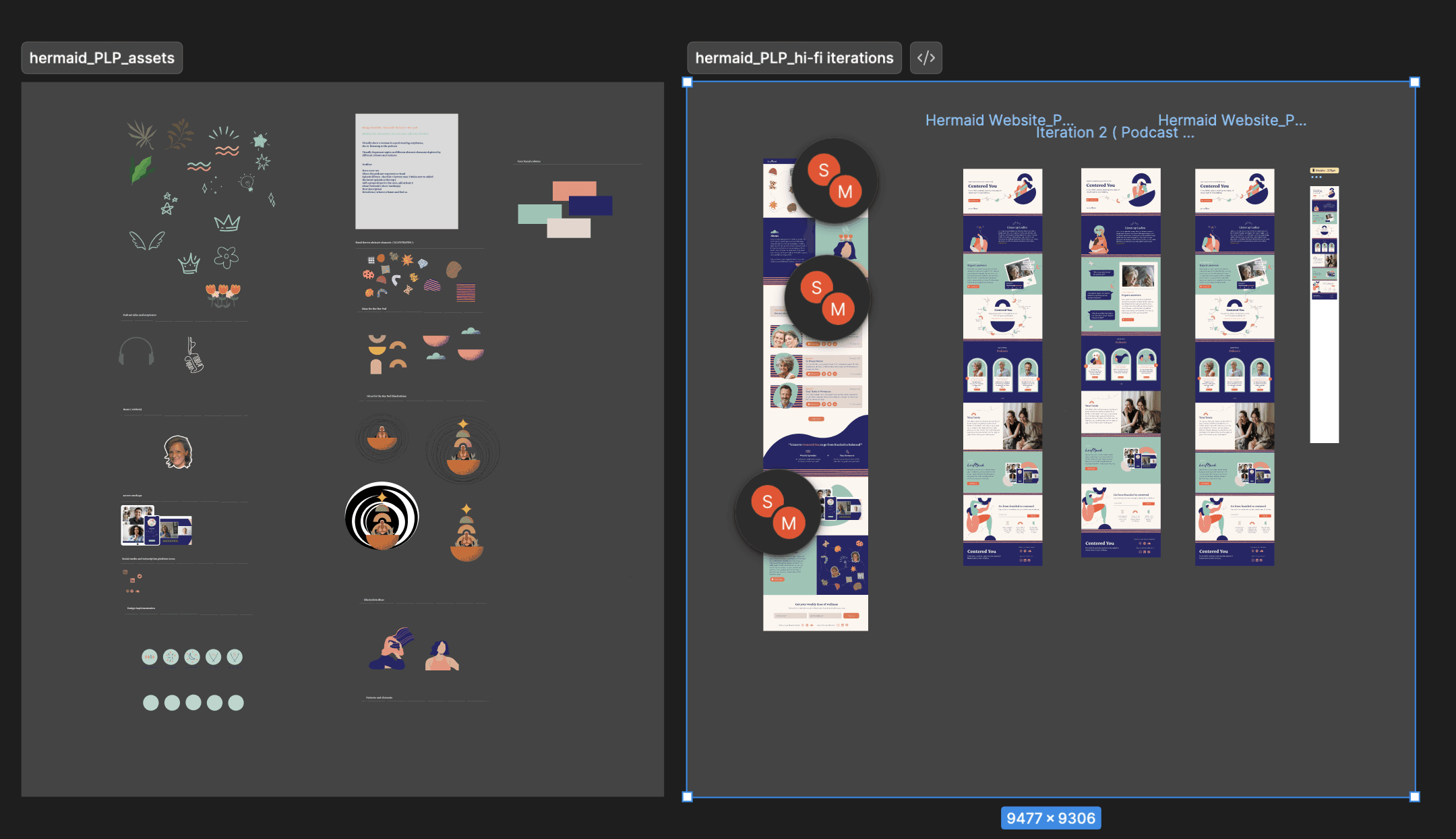
As Hermaid matured, it became clear that understanding hormonal health required more than structured design. It needed a voice. The podcast landing page was created to extend Hermaid’s experience into education, transforming the product’s knowledge system into an ongoing dialogue with its audience.
I approached the page as an extension of the product logic, not a marketing layer. The design focused on discoverability, continuity, and comprehension, allowing users to explore episodes while seeing how each story connects to broader themes in women’s health.
Alongside the structure and copywriting, I created a series of illustrations that visualised key hormonal concepts and emotional narratives within each episode. These visuals made medical topics approachable and gave Hermaid a distinct visual signature that carried across the platform.
Including this work here matters because it shows how Hermaid’s design system extends beyond interface and into communication. The podcast experience became proof that UX, content, and visual storytelling can work together to build trust and keep complex information human.

What it led to
Outcomes
The work at Hermaid established the design and communication foundation for a product that continues to evolve. The experience architecture and system logic I developed created visible improvements in both the user experience and the internal design workflow.
During my time, Hermaid grew from a concept into a cohesive digital ecosystem with a clear identity and structured experience. The system-level approach strengthened usability and gave the team a framework that supported continuous iteration.
Key outcomes included:
• Improved information comprehension and navigation through structured content design.
• Faster design to development handoff through a documented component system.
• Consistent visual and verbal communication across product and brand layers.
• Reduced friction in content creation through scalable patterns and tone guidelines.
• Greater confidence from early user testing, where participants described the interface as clear and trustworthy.
While the company has since expanded in new directions, the underlying design principles continue to shape how information is structured, presented, and understood within the Hermaid ecosystem.
Reflection
Designing Hermaid was an exercise in building systems that endure beyond ownership, creating a foundation that continues to evolve and support new forms of care and communication.